Dental Crowns and Bridges in Bogotá — Dr. Evelyn Melo, Bogotá, Colombia
A broken, badly worn or root-canal-treated tooth, or an old crown that no longer works? A crown covers and protects the tooth so you can chew without fear again. As an oral rehabilitation specialist I plan it within your bite: material, shape and height chosen so it lasts for years, not months.
For international patients
Dr. Evelyn Melo treats patients from the United States, Europe and Colombians living abroad. The process starts remotely: a free video consultation, then you send your dental records and receive a preliminary diagnosis and a written treatment plan before you travel to Bogotá. Specialist procedures in Colombia typically cost 50–70% less than equivalent care in the U.S. Read how the international patient process works.
What is a dental crown and when is it needed?
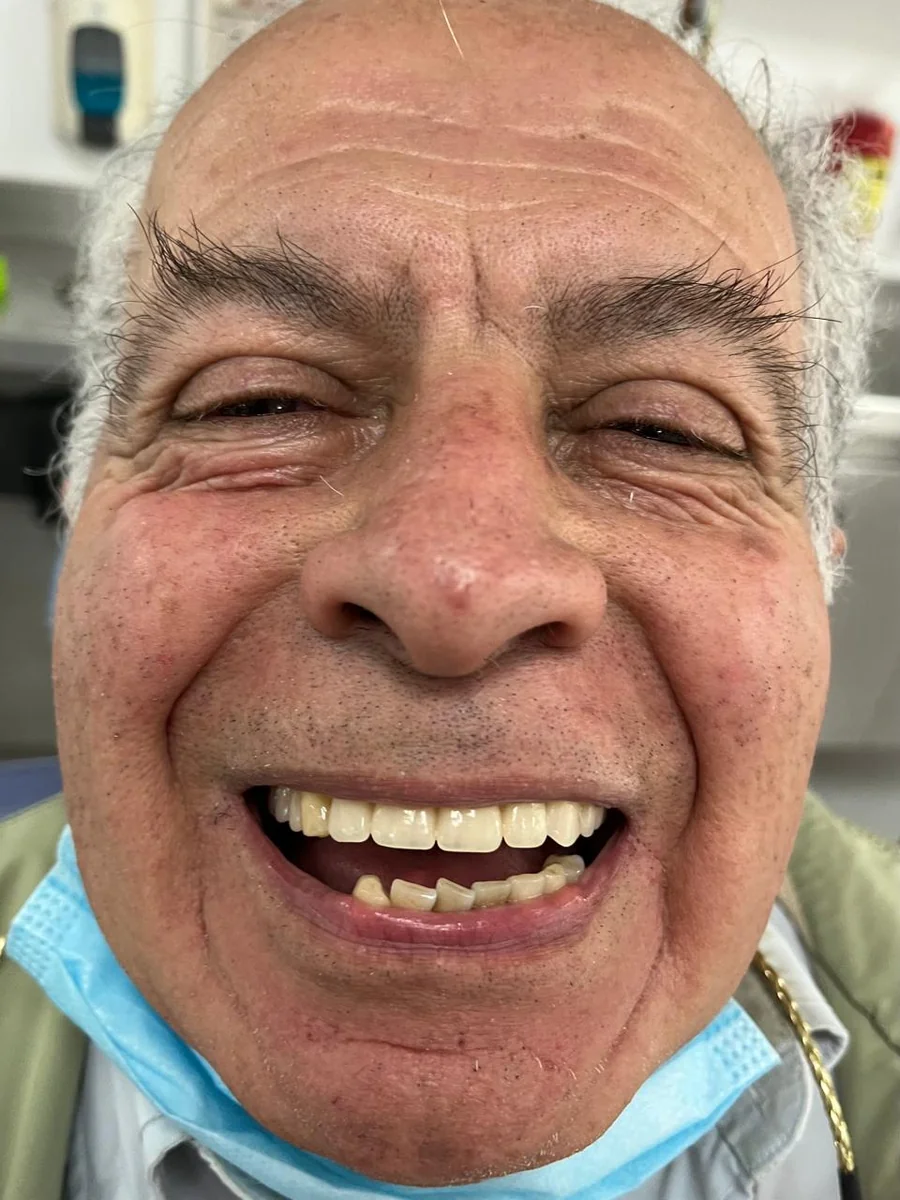
A dental crown is a cap that completely covers the visible part of a weakened tooth. It is cemented over the prepared tooth and protects it from fractures while restoring its shape, height and color. Unlike a filling, which repairs one area, a crown wraps the whole tooth and distributes chewing forces over a new, strong structure.
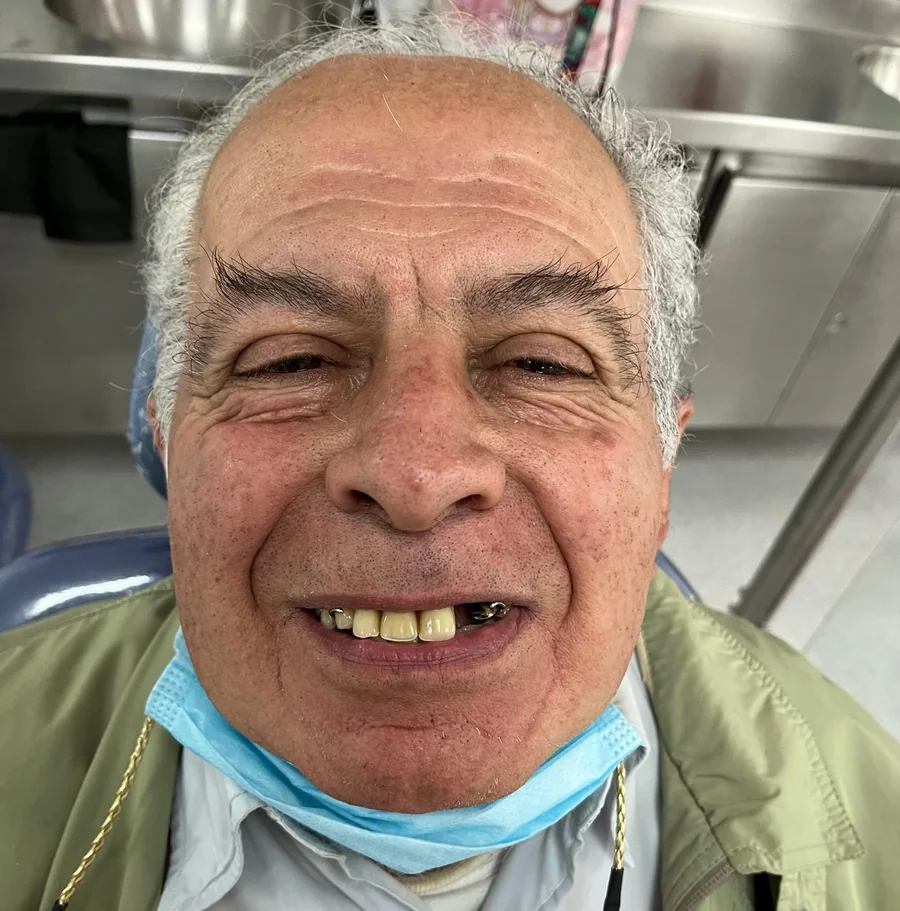
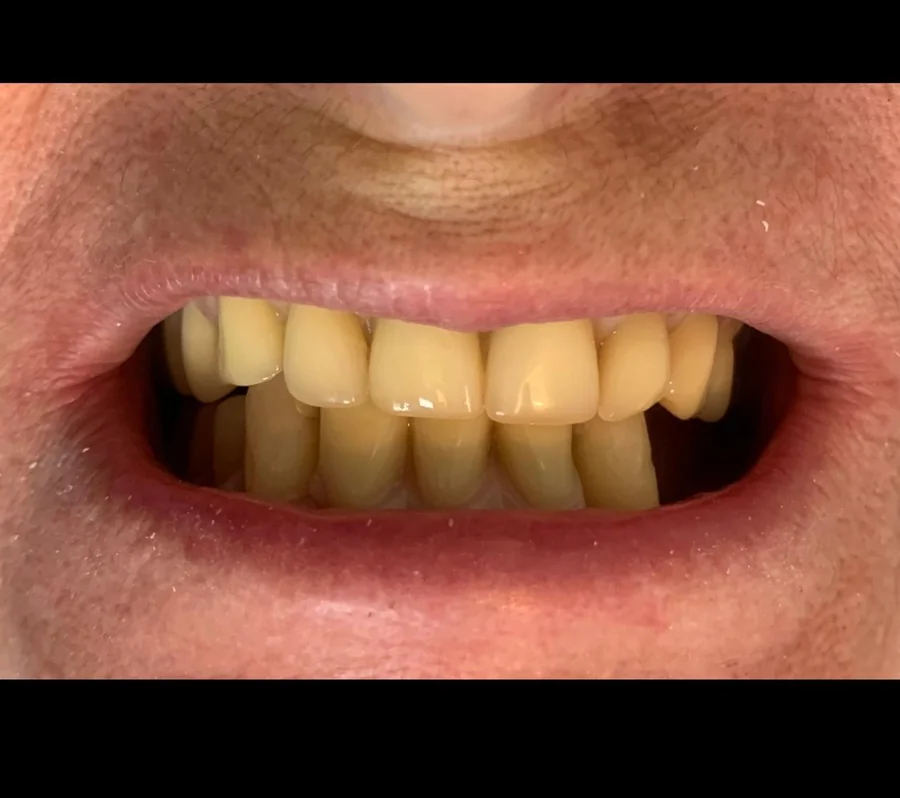
It is indicated when the tooth can no longer hold a regular restoration: large fractures, severe wear from bruxism, root-canal-treated teeth (which become brittle), very large old fillings, badly discolored teeth, or old crowns that came loose, fractured or left a grey line at the gum.
When a tooth is missing and its neighbors need crowns, a fixed bridge replaces the lost tooth by resting on them. And when the tooth no longer exists, the crown goes on an implant. Choosing between a crown, a bridge or an implant is not a catalog decision: it depends on how much structure is left, the available bone and how you close your mouth. That is why I decide it with an exam and an X-ray, not over the phone.
Types of crowns: zirconia, lithium disilicate and porcelain-fused-to-metal
Zirconia
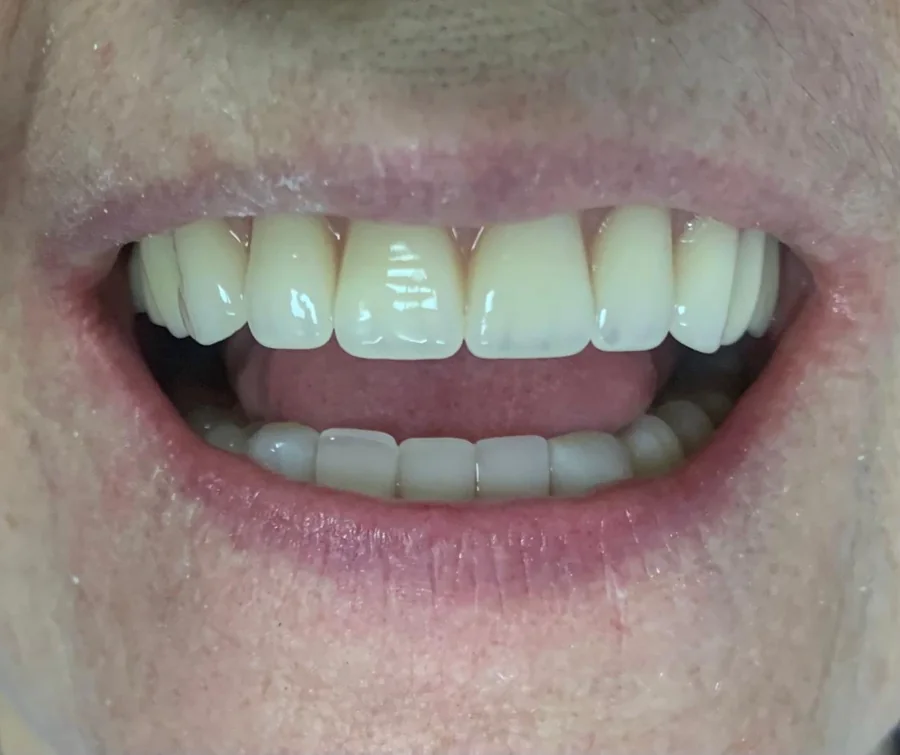
The strongest. Ideal for molars and for patients who clench or grind. Today's zirconia is translucent and looks natural on front teeth too. No metal, so no grey line at the gum.
Lithium disilicate (high-strength porcelain)
The most aesthetic. It mimics how a natural tooth transmits light, which is why I prefer it for incisors and canines when the bite allows. Strong, but less so than zirconia in high-force areas.
Porcelain-fused-to-metal
The classic option: a metal base covered with porcelain. Very durable and economical, but over time a dark line can show at the gum edge. Today I reserve it for specific cases in areas that are not visible.
Fixed bridge
Two or more joined crowns that replace one or several missing teeth by resting on the neighboring teeth. Indicated when those teeth already need crowns or when an implant is not viable; if they are healthy, I usually prefer an implant so I don't have to prepare them.
Implant crown
When the tooth no longer exists, the crown is screwed or cemented onto an implant. It is the solution closest to your own tooth and the one that best protects the neighbors. I explain it in detail on the dental implants page.
How a dental crown is made step by step
Assessment and X-ray
I examine the tooth, the gum and how you close your mouth. With the X-ray I confirm whether the tooth can be saved, whether it needs a root canal or post first, and which material suits the force of your bite. You leave with the plan and a written quote.
Preparation and impression
Under local anesthesia I prepare the tooth just enough for the crown to have thickness without weakening it further. I take the impression (or digital scan) and record the shade so the crown blends with the neighboring teeth.
Temporary crown
You leave the appointment with a temporary: you can eat and smile normally while the lab makes the final crown. In this phase I adjust the height if the bite doesn't feel comfortable.
Try-in and cementation
I try the final crown: fit at the gum margin, contact with neighbors, color and, above all, bite. Only when everything closes well do I cement it. Usually two appointments in total, one or two weeks apart.
Follow-up
A few weeks later I check that the gum is healthy and that there are no high contact points. A well-fitted crown goes unnoticed: that is the goal.
Crown, veneer, filling or implant? How I decide
The rule is to preserve as much healthy tooth as possible. If the damage is small, a filling or an inlay is enough. If the problem is purely cosmetic on a healthy tooth, a veneer covers the visible face without preparing the whole tooth. A crown comes in when the remaining structure can no longer cope: fractures, root canals, severe wear or old restorations that failed.
If the tooth cannot be saved, the question changes: bridge or implant? An implant leaves the neighbors untouched and preserves bone; a bridge is faster and needs no surgery, but requires preparing two teeth. With the X-ray and the exam I show you which one suits your case and why.
A common mistake is placing a beautiful crown on a bite that doesn't close properly: months later it fractures, comes loose or the joint hurts. That is why, before preparing anything, I analyze how your teeth distribute force. In some cases the crown is part of a broader oral rehabilitation plan; in others it is a simple two-visit treatment.
How long a crown lasts and how to care for it
A well-planned, well-fitted crown lasts 10 to 15 years, and many go beyond 20. What shortens its life most is not the material but decay at the gum margin, a poorly adjusted bite and unprotected bruxism. That is why the final adjustment and follow-ups matter as much as the crown itself.
Care is the same as for a natural tooth: brushing twice a day, floss or an interdental brush at the gum margin and a check-up every six months. If you clench or grind, a night guard protects the crown and everything else. Avoid biting ice or opening things with your teeth: porcelain withstands chewing, not tools.
If an old crown came loose, broke or left a dark edge, there is no need to panic, but do have it checked soon: decay may be advancing underneath without pain. I examine it and tell you whether it can be re-cemented or whether a new one is the better choice.
Why have your crowns made by an oral rehabilitation specialist
Crowns and bridges are the heart of Oral Rehabilitation, the specialty I trained in and teach at Pontificia Universidad Javeriana. Making a crown is not just preparing and cementing: it is deciding which material withstands your bite, which height restores function and how that piece integrates with the rest of your teeth so nothing gets overloaded.
I work with labs that fabricate in zirconia and lithium disilicate with digital scanning, and I try every crown before cementing it. If your case needs several crowns, a bridge or a combination with implants, I plan it in phases with a written quote, so you know from the start what is done, in which order and what each stage costs.
Indicative pricing — Dental Crowns and Bridges in Bogotá
- Assessment with X-ray and treatment plan: Confirmed at booking
- Crown per unit (zirconia or lithium disilicate): Variable by material and whether a post or root canal is needed first
- Fixed bridge (several units): Payment plan available
- Replacing old crowns or phased rehabilitation: Written quote at the assessment
Frequently asked questions — Dental Crowns and Bridges
- How much does a dental crown cost in Bogotá?
- It depends on the material (zirconia, lithium disilicate or porcelain-fused-to-metal), on whether the tooth needs a root canal or post first and on how many teeth are treated. That is why I do not publish a single price: at the assessment you receive a written quote with each component, and for several crowns or a bridge we agree on a payment plan.
- Does getting a crown hurt?
- No. The preparation is done under local anesthesia and, if the tooth already has a root canal, you feel practically nothing. Afterwards there may be mild cold sensitivity for a few days with the temporary; it disappears once the final crown is cemented.
- How many appointments do I need and how long does it take?
- Usually two appointments one or two weeks apart: in the first I prepare the tooth, take the impression and place the temporary; in the second I try and cement the final crown. If a root canal or post is needed first, one more appointment is added.
- Crown or veneer: which one do I need?
- A veneer covers only the visible face and is used for cosmetic purposes on healthy teeth. A crown wraps the whole tooth and is indicated when it has lost structure: fractures, root canal, wear or large fillings. If the tooth is healthy and the goal is cosmetic, a veneer is the more conservative option; if it is weakened, a crown protects it.
- My old crown came loose or broke, what should I do?
- Keep it, don't glue it with household adhesives and message me. If it is intact and the tooth underneath is healthy, it can sometimes be re-cemented; if there is decay underneath, it is fractured or it is many years old, a new one is the better choice. I give you a priority appointment to check it.
- What is better to replace a tooth: a bridge or an implant?
- If the neighboring teeth are healthy, I usually prefer an implant: it doesn't prepare them and it preserves bone. If those teeth already need crowns, or there isn't enough bone and you don't want a graft, a bridge is an excellent and faster solution. We decide with the X-ray at the assessment.
About Dr. Evelyn Melo
Dr. Evelyn Melo is a dentist and Oral Rehabilitation specialist, graduate and professor of Pontificia Universidad Javeriana in Bogotá, Colombia, with more than 11 years of clinical experience and over 250 active patients. She works by appointment only, designs every treatment plan case by case with a detailed written quote at no obligation, and treats patients fully in English or Spanish in northern Bogotá (Chapinero/Chicó area). International patients receive a free video consultation and a written treatment plan before traveling to Colombia.