Oral Rehabilitation in Bogotá — Dr. Evelyn Melo, Bogotá, Colombia
My specialty. I restore chewing function and aesthetics in patients with worn, missing or structurally damaged teeth. Crowns, bridges, dentures and implants with case-by-case planning and absolute respect for your bite.
For international patients
Dr. Evelyn Melo treats patients from the United States, Europe and Colombians living abroad. The process starts remotely: a free video consultation, then you send your dental records and receive a preliminary diagnosis and a written treatment plan before you travel to Bogotá. Specialist procedures in Colombia typically cost 50–70% less than equivalent care in the U.S. Read how the international patient process works.
What is Oral Rehabilitation?
Oral Rehabilitation is the dental specialty that restores chewing function and oral aesthetics when there are worn, missing, fractured or structurally damaged teeth. Unlike general dentistry which treats one tooth at a time, an Oral Rehabilitation specialist plans the complete bite: how your teeth close, how you distribute force when chewing, how your jaw relates to your skull (temporomandibular joint).
It combines multiple techniques — crowns, bridges, fixed and removable dentures, dental implants, occlusal adjustments — into an integrated plan designed case by case. The goal is not just to replace missing teeth: it is to give you back a mouth that functions well, lasts for years, lets you eat without pain and looks natural.
As an Oral Rehabilitation graduate and undergraduate Dentistry professor at Pontificia Universidad Javeriana, I plan each case with prior functional analysis. This prevents results that look good initially but cause joint pain, fractures, or need redoing within a few years.
Oral Rehabilitation treatments
Dental crowns
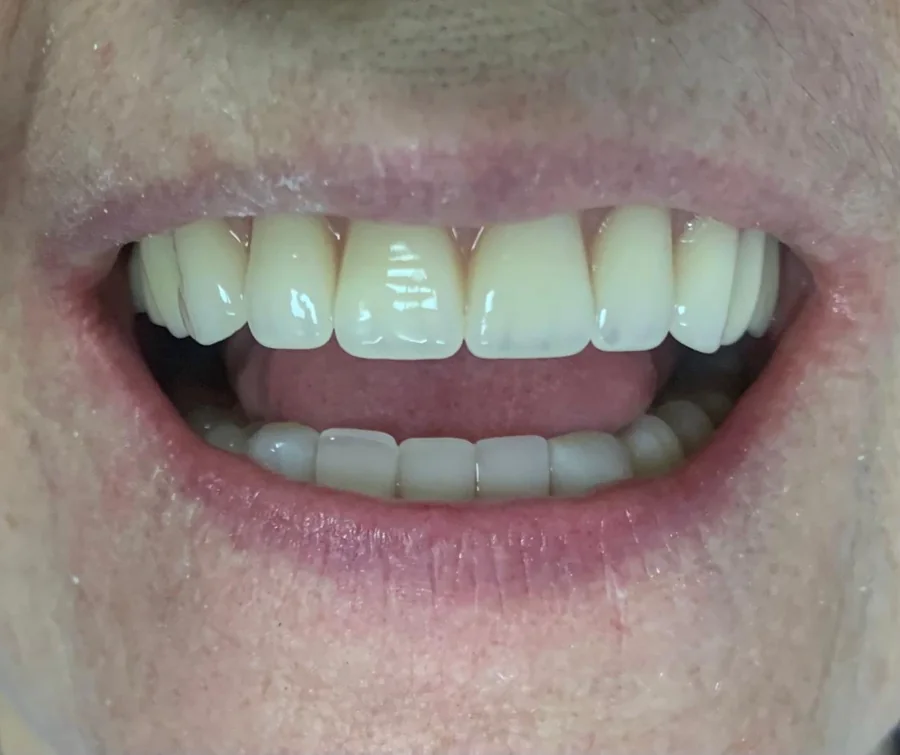
Complete tooth covering when it has lost structure from large cavity, fracture or previous root canal. Modern materials: zirconia (high strength + aesthetics), lithium disilicate, metal-porcelain. They last 10-15 years with good maintenance.
Dental bridges
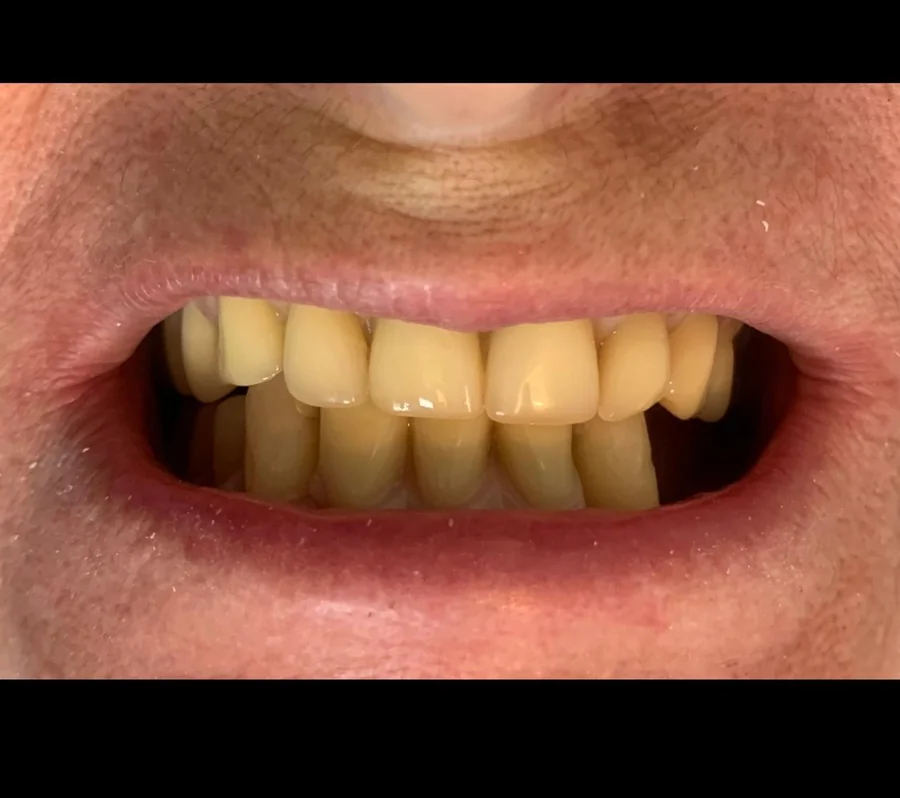
Replacement of 1-3 consecutive missing teeth supported by adjacent teeth. Fixed solution (does not come off). Indicated when implants are not viable or when neighboring teeth also need restoration.
Dental implants
Definitive replacement of missing teeth with titanium screws that integrate with bone (osseointegration in 4-6 months). Indicated in single, multiple or total tooth loss. Complemented with crowns or fixed prostheses on implants.
Fixed and removable prostheses
Replacement of several teeth or complete arches. Fixed (on implants) is the ideal option when viable; removable is a functional alternative when the case does not allow implants.
Occlusal plane reconstruction
When there is generalized wear from bruxism, reflux or erosion, the height and shape of teeth is rebuilt to restore vertical dimension. Complex case requiring planning with splints and prior mock-ups.
When do you need Oral Rehabilitation?
There are clear indications where general dentistry is no longer sufficient and specialist planning is needed: loss of several teeth (not just one isolated), severe bruxism with visible wear, multiple dental fractures, occlusal problems causing joint or headache pain, teeth with old root canals and crowns requiring replacement, or generalized wear from erosion.
Other signs: difficulty chewing, permanent sensitivity to cold or heat, jaw sounds when opening the mouth, recurrent facial pain, dentures that no longer fit well or come loose when eating. If you experience several of these symptoms, a comprehensive specialist assessment is the right path.
The first step is always a diagnostic assessment where I review the complete case: clinical photos, occlusal analysis, periodontal evaluation and X-rays if you bring them. With that I build a phased treatment plan with realistic timeline and detailed written budget.
Oral rehabilitation in older adults
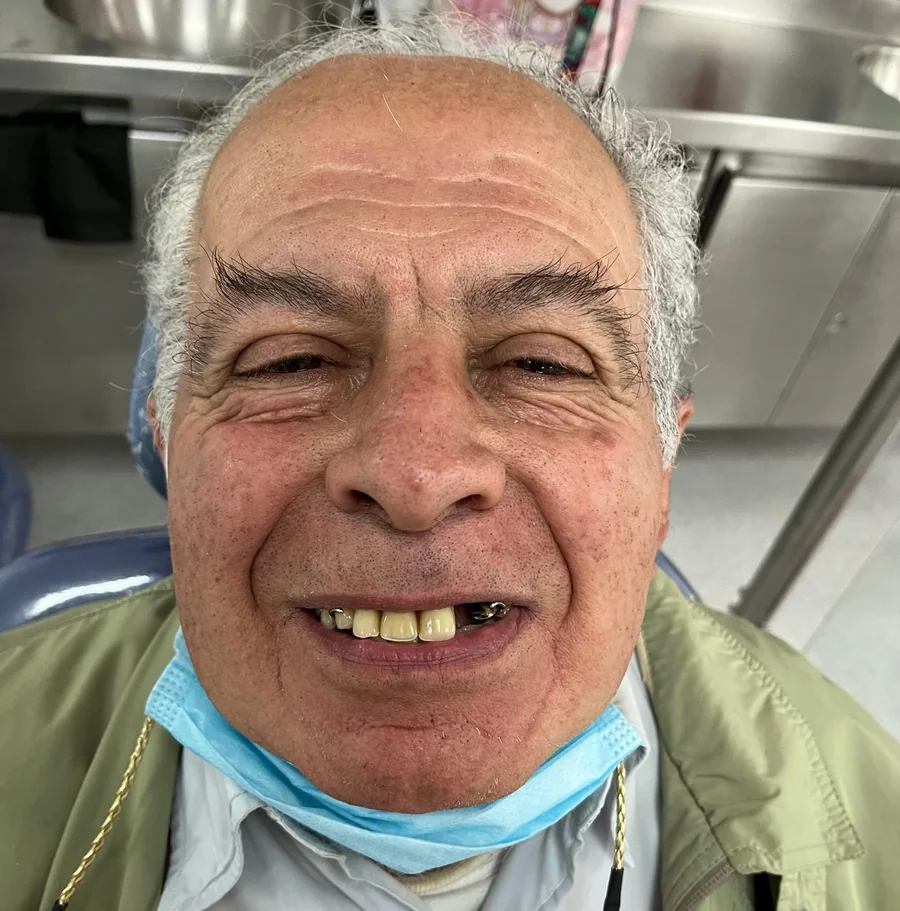
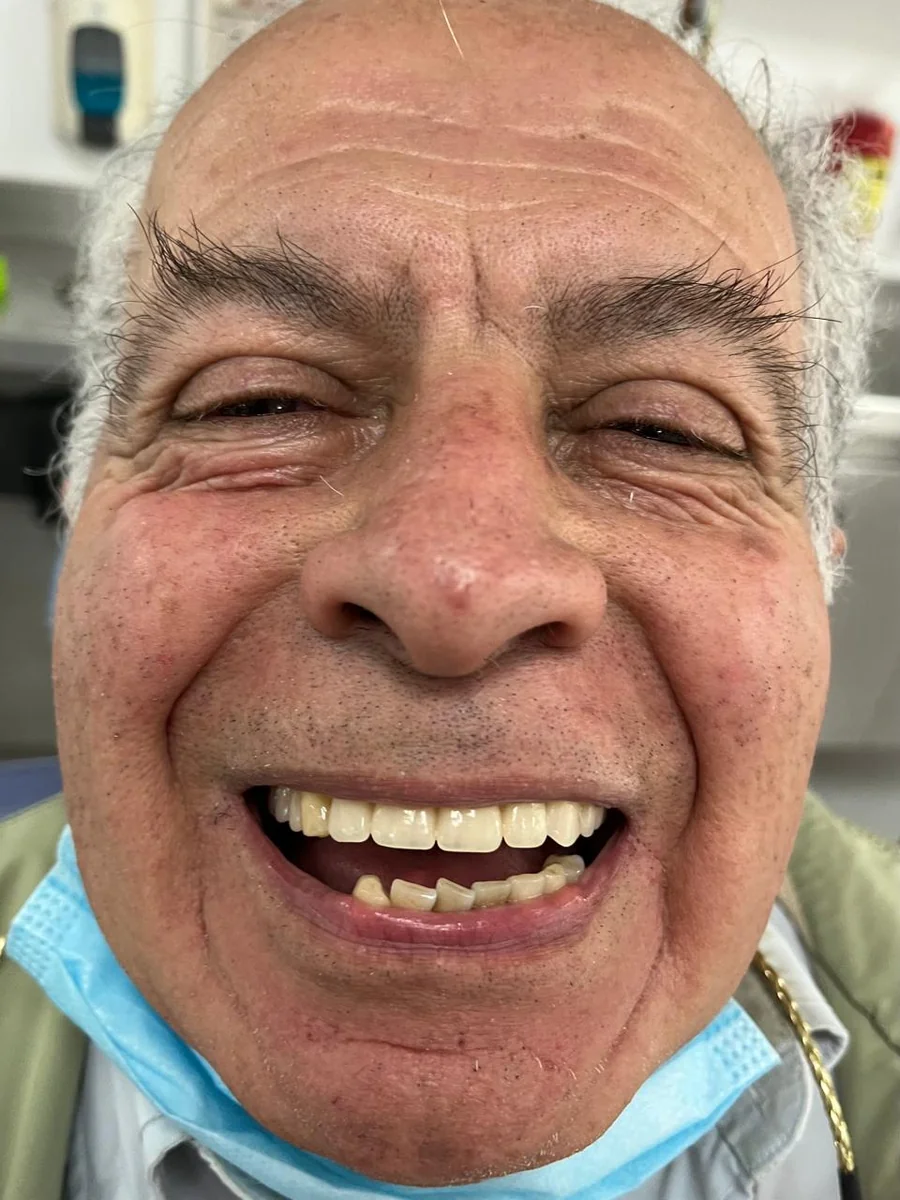
Many of the people who need a complete oral rehabilitation are over 55. It is the stage when missing teeth, old crowns and bridges that have reached the end of their lifespan, accumulated wear and dentures that no longer fit all come together. It is not too late: a well-planned mouth at 60 or 70 is enjoyed for decades.
Age alone is not a contraindication. What defines the plan is the condition of the bone, the health of the gums and your general health. Controlled diabetes, high blood pressure or anticoagulant treatment do not rule out rehabilitating your mouth: the plan is made with more care and, when needed, in coordination with your physician.
If you wear a removable denture that moves when you talk or eat, you do not have to get used to it. It can often be stabilized with implants or replaced by a fixed prosthesis. Which option is right for you depends on the assessment: I explain the alternatives with their advantages, limits and cost, and you decide calmly.
Many patients come with a son or daughter. They are welcome at the assessment: hearing the plan together helps you decide with peace of mind.
Second opinion in oral rehabilitation
If you were told that all your teeth need to be removed, or you received a quote you do not fully understand, asking for a second opinion is reasonable. A rehabilitation is a big decision and it is normal to want another view before starting.
At the assessment I review your complete case, including any studies and X-rays you already have, and tell you clearly which teeth can be kept, which cannot and why. Sometimes the conclusion matches what you were already told; other times a more conservative alternative appears. Either way you leave with a written plan to compare.
I also treat cases that need to correct previous work: bridges that came loose, ill-fitting crowns or dentures that never worked well. Before redoing anything, I look for why it failed, so it does not happen again.
How the Oral Rehabilitation process works
Comprehensive diagnosis
First appointment 60-90 minutes. Occlusal analysis, periodontal evaluation, panoramic X-rays and/or 3D tomography if the case requires it. I identify everything that needs attention and prioritize by clinical urgency.
Phased treatment plan
I provide the complete plan in writing divided into phases (preparatory, restorative, maintenance) with timeline, material options, therapeutic alternatives and detailed budget. We decide the path together.
Preparatory phase
Stabilization: gum treatment, cavity removal, necessary root canals, planned extractions. Without skipping steps — a rehabilitation built on a diseased mouth fails.
Surgical phase (if implants apply)
Placement of dental implants under controlled conditions, with surgical guide when indicated. Osseointegration period (4-6 months) during which you wear a temporary prosthesis.
Restorative phase
Placement of crowns, bridges, definitive prostheses. Prior aesthetic try-in tests. Occlusion verification, fine adjustments until every functional movement is harmonious.
Lifelong maintenance
A quality rehabilitation lasts decades if maintained. Check-ups every 6 months, prophylaxis, occlusal adjustments if needed. You stay on as an active patient.
How much does oral rehabilitation cost in Bogotá?
How many teeth need treatment
Replacing one tooth is not the same as rehabilitating a full arch. The number of missing, worn or previously restored teeth is what moves the budget the most. That is why I do not publish fixed prices: two rehabilitations can cost very different amounts even when they have the same name.
Implants, bridges or dentures
Each solution has a different cost and lifespan. At the assessment we compare the options that fit your case, not just the most expensive one.
Materials
Zirconia, lithium disilicate or metal-porcelain have different prices and behaviors. I explain which one suits each area of your mouth and the force of your bite.
Preparatory phase
If gums, cavities or root canals need treatment before rehabilitating, that is added to the plan. Skipping this phase is cheaper at first and more expensive later.
Diagnostic studies
Some cases need a 3D scan or planning models; others do not. I only request the studies needed to decide.
How it is paid
The quote is delivered in writing and divided by phases, and for extensive treatments we agree on a payment plan that follows the progress of the treatment.
How to choose an oral rehabilitation dentist in Bogotá
Specialist degree in Oral Rehabilitation
Oral rehabilitation is a postgraduate specialty. Ask where the person planning your case trained; in Colombia you can verify it in ReTHUS, the Ministry of Health registry.
A written plan before starting
A good specialist gives you the diagnosis, the alternatives and a phased quote in writing, and gives you time to decide.
Planning of the complete bite
Rehabilitation is not done tooth by tooth: it must consider how you close, how you chew and the state of your jaw joint. Be wary of plans that only talk about aesthetics.
Options, not a package
If you are offered only one solution, or a fixed-price package before anyone examines your mouth, ask for a second opinion.
Follow-up after treatment
A well-done rehabilitation includes periodic check-ups. Ask how maintenance will work and who responds if something fails.
Why choose a Javeriana specialist
A poorly planned Oral Rehabilitation is one of the most expensive and painful problems in dentistry. Redoing a case of multiple crowns can cost 2-3 times the original budget, and occlusal problems generate chronic joint pain affecting quality of life for years.
As an Oral Rehabilitation specialist trained at and professor of Pontificia Universidad Javeriana — one of the most recognized dental schools in Colombia —, I plan each case with functional clinical criteria. 11 years of experience, over 250 active patients and a case-by-case approach, not pre-designed packages. Bilingual care in Spanish and English. Every plan is designed to last 15-20+ years, not to close the appointment sale.
Indicative pricing — Oral Rehabilitation in Bogotá
- Comprehensive assessment with diagnosis and phased plan: Confirmed at booking
- Dental crown (zirconia / lithium disilicate): Variable by material and complexity
- Single dental implant (screw + crown): Payment plan available
- Complete oral rehabilitation by phases: Written quote at initial assessment
Frequently asked questions — Oral Rehabilitation
- What does an oral rehabilitation dentist do?
- An oral rehabilitation dentist is a dentist with a postgraduate specialty in Oral Rehabilitation. They restore function and aesthetics to mouths with missing, worn or heavily restored teeth, planning the whole: crowns, bridges, dentures and implants, and how the bite fits the jaw joint. It is the right specialist when the problem is no longer a single tooth.
- How much does a complete Oral Rehabilitation cost in Bogotá?
- Cost varies dramatically case by case because it depends on how many teeth are rehabilitated, whether implants are required, which materials are chosen and if there are preparatory phases (gums, root canals). At the initial assessment I provide a detailed written quote divided by phases, with no commitment. We coordinate payment plans for extensive treatments, allowing the investment to be distributed over the months of treatment.
- Who are the best oral rehabilitation dentists in Bogotá?
- There is no official ranking, so verifiable criteria are worth more than lists: a specialist degree in Oral Rehabilitation, planning of the complete bite rather than tooth by tooth, a written plan and quote, and alternatives instead of a package. I am a specialist and undergraduate Dentistry professor at Pontificia Universidad Javeriana, and I work with that method in every case.
- How long does the complete treatment take?
- A complete oral rehabilitation typically takes between 6 months and 18 months. The preparatory phase (stabilizing gums, removing cavities) is 1-3 months. If there are implants, osseointegration adds 4-6 additional months. The final restorative phase (crowns, definitive prostheses) is 2-4 months. Cases without implants and without prior stabilization can complete in 4-6 months. I provide a specific timeline at the assessment.
- My denture moves. Can it be fixed?
- There are several options. A denture that moves may need an adjustment or a reline, or it may be time to stabilize it with implants or replace it with a fixed prosthesis. At the assessment I review the denture, the bone and the gums, and explain the possible options for your case.
- Can I ask for a second opinion if I already have a quote?
- Yes. Bring your X-rays, studies and the quote you were given. I review the complete case and tell you clearly whether I agree or which alternative I see, with a written plan so you can compare.
- Are dental implants safe and how long do they last?
- Dental implants are one of the treatments with the most clinical evidence in modern dentistry — over 50 years of follow-up. Well-placed implants with good hygiene maintenance and periodic check-ups last between 15 and 25 years or more. The 10-year success rate exceeds 95%. The critical factor is not the implant itself, but the prior planning (amount of available bone, periodontal health, patient habits) and subsequent check-ups.
- Is oral rehabilitation painful?
- No. All procedures are performed with effective local anesthesia. Crown and bridge preparations are comfortable. Implant surgery generates mild post-operative discomfort (local swelling) for 24-48 hours, manageable with common analgesics and prophylactic antibiotic. Most patients return to normal activity the next day. Pain control is a central part of the clinical protocol.
- Is there an age limit for dental implants?
- There is no maximum age. I have placed implants in patients over 75 years old with excellent results. What matters is not chronological age but three factors: amount of available bone (assessable with 3D tomography), controlled systemic health (diabetes, anticoagulants — manageable with medical coordination) and commitment to oral hygiene. There is a minimum age: typically 18-21 years when maxillofacial growth has stabilized.
- Do you treat denture or crown emergencies?
- Yes. If your denture broke, a crown fell off or you feel pain in a previous rehabilitation, message us on WhatsApp and we'll find a priority slot. Most minor emergencies are resolved in one appointment. If the emergency involves severe pain or trauma, I guide you to the correct protocol immediately.
About Dr. Evelyn Melo
Dr. Evelyn Melo is a dentist and Oral Rehabilitation specialist, graduate and professor of Pontificia Universidad Javeriana in Bogotá, Colombia, with more than 11 years of clinical experience and over 250 active patients. She works by appointment only, designs every treatment plan case by case with a detailed written quote at no obligation, and treats patients fully in English or Spanish in northern Bogotá (Chapinero/Chicó area). International patients receive a free video consultation and a written treatment plan before traveling to Colombia.